The short version
No eVTOL certified or close to certification can carry a patient lying on a stretcher with a ventilator and two clinicians. The aircraft testing at Port City seats two and flies about 24 km in practice. So the realistic first uses of electric aircraft in Sri Lankan emergency care are three: bringing a doctor or a specialist team to the patient, carrying blood, antivenom, medicines and samples, and moving stable, seated patients between hospitals. Helicopters remain the only way to fly a critically ill patient, at night, or in poor weather.
What exists today
Sri Lanka's emergency care on the ground is strong. The free 1990 Suwa Seriya ambulance service began in 2016 with 88 ambulances funded by India, had answered more than 1.8 million calls by 2023, and reports an average response of 13 to 15 minutes with a fleet heading towards 400. In the air there is far less. Senok Air, described by the trade press as the country's only authorised helicopter emergency medical operator, had flown 400 air ambulance missions by August 2026 from Ratmalana, and the Air Force carries out evacuations when needed. An earlier private helicopter ambulance service, run by Falck, operated from 2013 and withdrew in 2015.
The gap is the transfer that follows the first response. A patient in Hambantota, Nuwara Eliya or Vavuniya who needs a cardiac catheter laboratory, a neurosurgeon or intensive care is usually one to four hours by road from the hospital that has it.
What the evidence says
The research on helicopter ambulances is more cautious than their reputation. A Cochrane review of 38 studies and more than 280,000 patients could not establish an overall survival benefit over ground ambulances for major trauma, though it found a benefit suggested for transfers between hospitals to a higher level of care. That is the situation Sri Lanka's geography creates.
Where electric aircraft have been studied for emergency use, the finding is consistent. A German air rescue study that simulated 26,000 past missions concluded that small electric multicopters should carry doctors, not patients: within a radius of 25 to 30 km a doctor reached the scene about twice as fast as by road, while helicopters were kept for carrying patients. In Rwanda, a national drone network delivering blood to district hospitals was followed by large falls in deaths in hospital from bleeding after childbirth, concentrated near the drone bases. In the United States, the first approved missions for electric vertical aircraft have been organ transport tests and demonstration flights for operators, and in India one manufacturer has a provisional agreement to supply stretcher-capable electric air ambulances, which are not yet certified; in November 2026 it said the aircraft had entered type certification with India's regulator. More
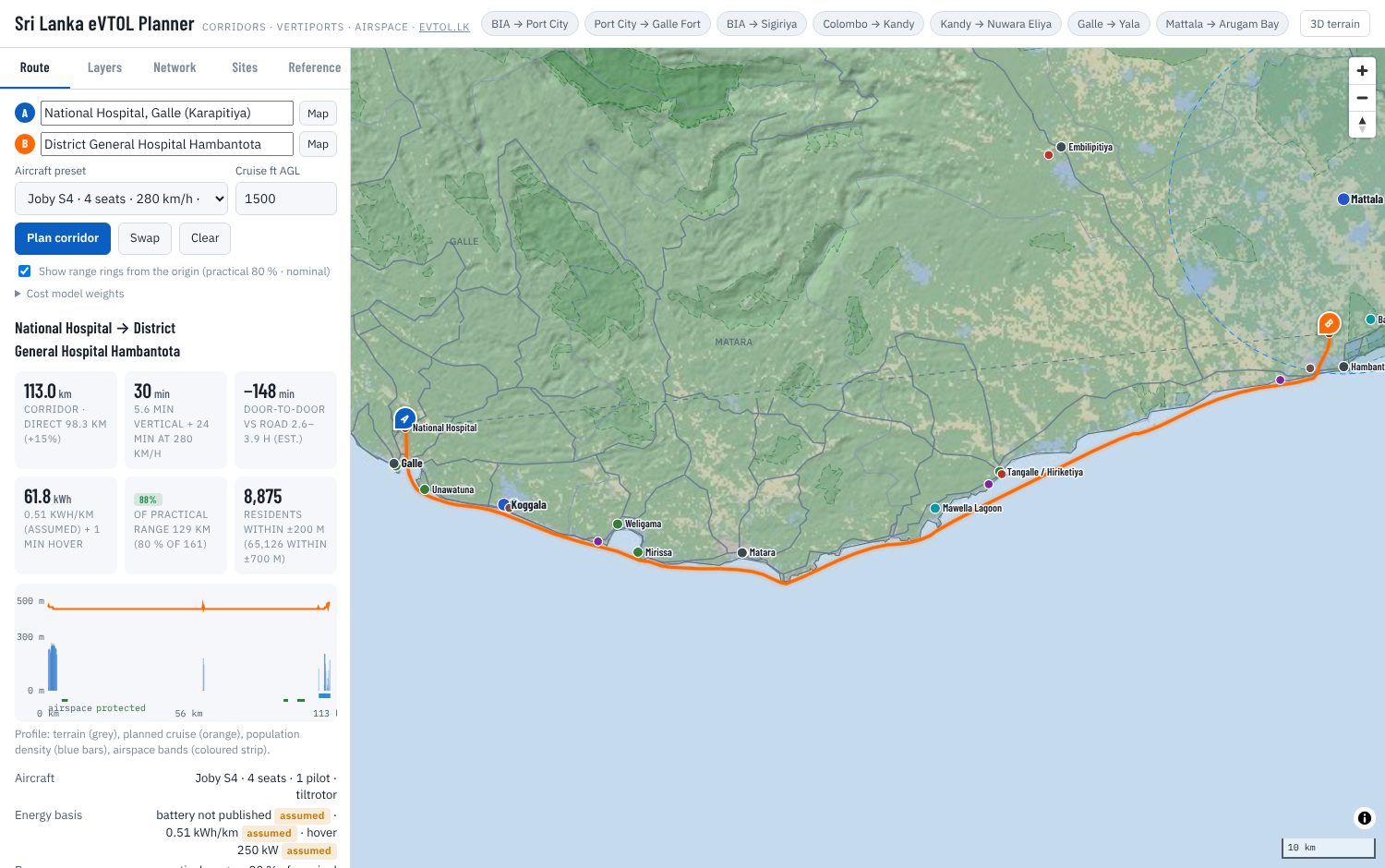
What the planner shows
We modelled six hospital-to-hospital corridors with a four-seat piloted aircraft of the kind expected to be certified later this decade. Flight times are 14 to 30 minutes where the road takes between one and almost four hours. The longer legs use most of the aircraft's practical range one way, so they would need charging at the far hospital.